

Press & Media


CliMA Collaboration Aims to Reinvent Earth System Modeling
Climate issues are politically polarized in the United States, but that’s not the only reason it’s been difficult to curb global warming, says Raffaele Ferrari, the Cecil and Ida Green Professor of Oceanography in MIT’s Department of Earth, Atmospheric and Planetary Sciences (EAPS).


How Do We Predict Climate Change?
Today, a new climate model is being developed by CliMA, a group of scientists, engineers, and mathematicians from Caltech, MIT, the Naval Postgraduate School, and JPL. This next-generation climate model integrates aspects of existing models with extensive data about Earth gathered by satellites and other instruments.
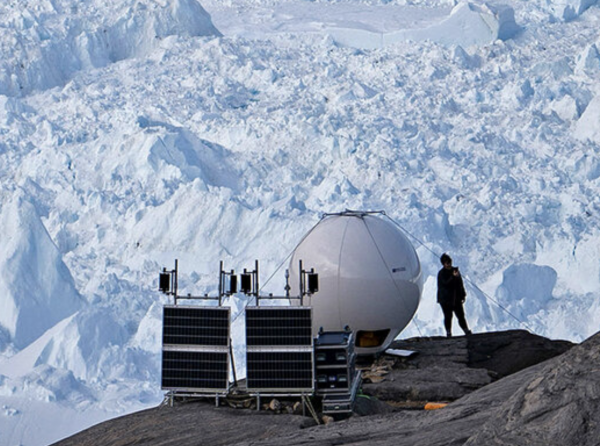

Meet the Team Shaking Up Climate Models
If scientists can create a new way to predict climate change – making it as accurate as, say, forecasting the weather – it would help people make everyday decisions: how high to build a sea wall or what crops to plant.

Study: Solar Geoengineering May Not be a Long-Term Solution for Climate Change
Seeding the atmosphere with aerosols would not prevent high atmospheric carbon dioxide concentrations from destabilizing low-lying clouds, opening the door to extreme warming.


Clouds, Arctic Crocodiles and a New Climate Model
Crocodile bones, 50 million years old, have shown up on the Arctic island of Ellesmere, and that’s a problem. Scientists have been unable to explain how the Arctic could have warmed up enough to host those tropical creatures.
Tapio Schneider, a senior research scientist at NASA’s Jet Propulsion Laboratory and professor at Caltech, thinks the answer may lie in the clouds.


Julia: Come for the Syntax, Stay for the Speed
When it comes to climate modelling, every computational second counts. Designed to account for air, land, sun and sea, and the complicated physics that links them, these models can run to millions of lines of code, which are executed on the world’s most powerful computers. So when the coder-climatologists of the Climate Modeling Alliance (CliMA) — a coalition of US-based scientists, engineers and mathematicians — set out to build a model from the ground up, they opted for a language that could handle their needs. They opted for Julia.

A Powerful New Model Could Make Global Warming Estimates Less Vague
The severity and speed of climate change will depend on the quantity of greenhouse gases we emit into the sky, but also on how sensitive the climate is to those gases.
One uncertainty is how clouds will respond as the atmosphere heats up. Tapio Schneider, a climate scientist at Caltech, and his colleagues from Caltech, Princeton, JPL, and MIT are building a climate model that will use machine learning, powerful computing, and petabytes of data to help resolve some of the unknowns around how, why, and where clouds form, produce precipitation, or dissipate. The goal: to cut the uncertainty in current predictions of carbon dioxide’s impact on the planet in half.
Science journalist Mallory Pickett sat down with Schneider to find out how his research will do this, and why it matters.

High CO2 Levels Can Destabilize Marine Layer Clouds
At high enough atmospheric carbon dioxide (CO2) concentrations, marine stratus clouds become unstable and disappear, triggering a spike in global warming, according to a new modeling study. The results could help solve the longstanding mystery in paleoclimatology of how past climates such as the Eocene (around 50 million years ago) got to be so warm that crocodiles could live in the Arctic.