

Press & Media


Climate Physicists Face the Ghosts in Their Machines: Clouds
The planet is getting hotter, but one factor in particular makes it hard to tell just how hot it will get. Physicists and computer scientists are racing to solve the problem of clouds.
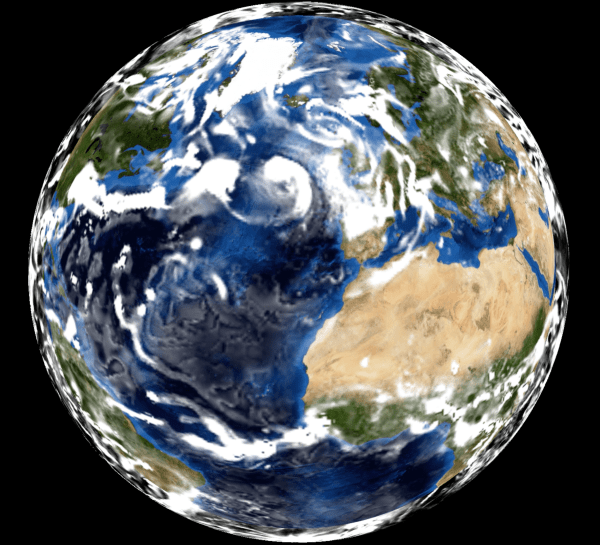

The Mystery of Clouds and a Supercomputer in the Political Crosshairs
The biggest uncertainty in climate science is white and fluffy.
Clouds reflect sunlight back into space, trap heat and move energy around. Their complexity bedevils the computer models that simulate how the climate could evolve. Now, the Trump administration’s plan to break up a crucial research center is casting a shadow over an effort to make a better model.

How Climate Scientists Saw the Future Before It Arrived
Over the past 60 years, scientists have largely succeeded in building a computer model of Earth to see what the future holds. One of the most ambitious projects humankind has ever undertaken has now reached a critical moment.


A Leap Toward Next-Generation Ocean Models
GPU-optimized ocean modeling achieves decade-long simulations in a day, enabling mesoscale-resolving climate simulations that open new opportunities for long-term planning in a changing climate.


Was, wenn die wolken verschwinden?
[Published in German] Katapultiert uns das Überschreiten von Kipppunkten direkt in eine «Treibhauswelt»? Nein, sagen Klimaforscher. Mögliche Ausnahme: Wolken.


How AI is improving climate forecasts
Researchers are using various machine-learning strategies to speed up climate modelling, reduce its energy costs and hopefully improve accuracy.

Creativity in Climate Modeling
Season 4 of Science in Parallel centers around creativity and computing, starting with an interview about climate modeling.
At this nexus of physics, earth science, mathematics and computing, researchers are also racing against the clock to accurately predict how global climate is shifting before the changes happen. Pulling all the scientific pieces together and communicating those results so that others can use them are significant creative challenges—ones that both Tapio Schneider and Emily de Jong of California Institute of Technology have embraced.


Deep Convection Podcast Season 4, Episode 5: Tapio Schneider
…
For the last few years, Tapio has been leading the CliMA project at Caltech. A visionary endeavor, the project aims to bring about a paradigm shift in the way climate models are constructed and used. It advocates for a more holistic approach, making use of observations, machine learning, and high-resolution simulations. The inception of CliMA came from a series of workshops on the future of Earth system modeling…


Methods From Weather Forecasting Can Be Adapted to Assess Risk of COVID-19 Exposure
Techniques used in weather forecasting can be repurposed to provide individuals with a personalized assessment of their risk of exposure to COVID-19 or other viruses, according to new research published by Caltech scientists.


Announcing the 2021 Google Cloud Customer Award Winners in Education and Research
We’re thrilled to celebrate this year’s seven Education and Research winners of the Google Cloud Customer Awards.
The second annual Google Cloud Customer Awards program honors organizations that have succeeded in turning new ideas into realities. Google experts independently judged and scored an unprecedented number of submissions from around the world. Winners in education and research demonstrated innovative thinking and inspirational digital transformation using Google Cloud products and solutions.