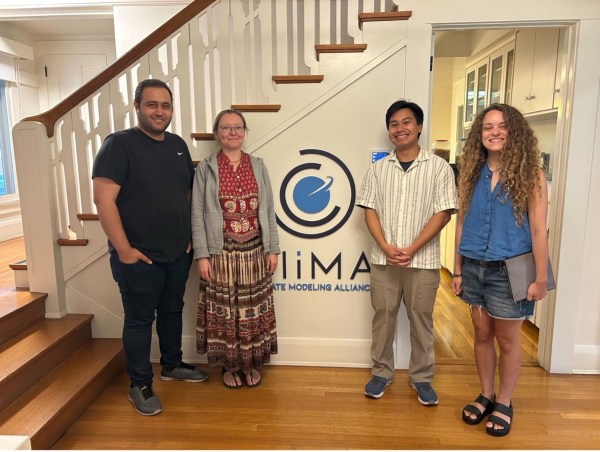
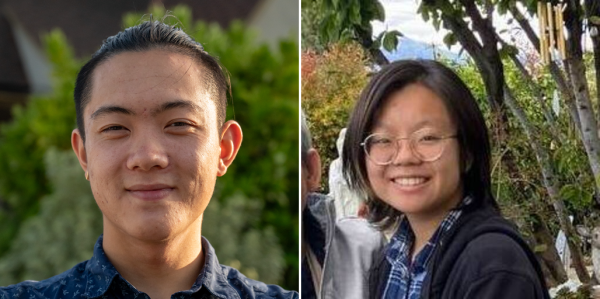
Over a 10-week summer period, the CliMA project welcomed three Summer Undergraduate Research Fellowship (SURF) interns. These undergraduate students were mentored by CliMA project scientists and software engineers on individual research projects that contributed to our model development.
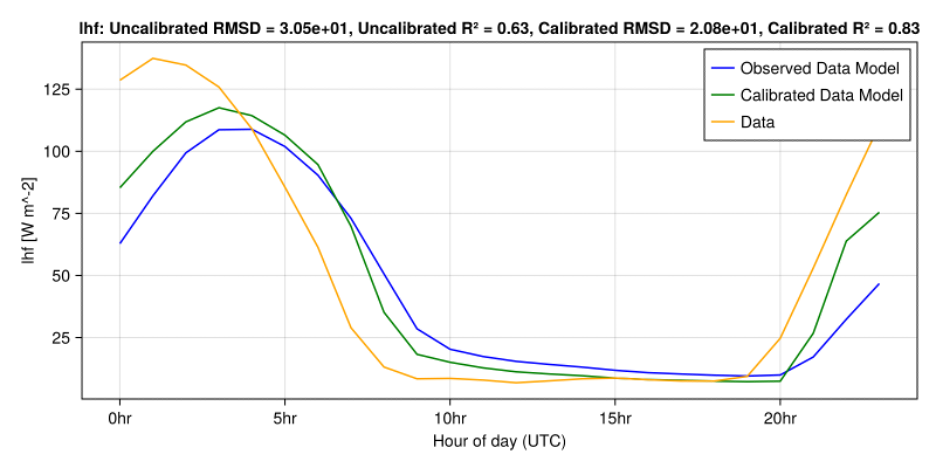
Thanhthanh Noel Nguyen, a second-year Caltech undergraduate, collaborated with Software Engineer Julia Sloan and the Land team. Her project focused on calibrating land models using FLUXNET observations, investigating how vegetation parameters vary with environmental conditions. Thanhthanh said “Julia was so patient and understanding to me, always ready to help … Everyone else at CliMA was also super friendly, and I always felt comfortable asking them for help or even just joking around as the summer progressed.” Additionally, she expressed her gratitude for meeting her fellow SURFs, Yuchen and Eric, and for the shared adventures they had outside of work.
Eric Pham, a fourth-year University of California San Diego student, shared his positive experience. His project focused on testing how well our unified convection and cloud microphysics parameterization captures rain formation in stratocumulus clouds (Sc). He said “The group culture and work environment made me feel extremely motivated while I was there. My mentors and pretty much everyone else in the CliMA house always supported me to the fullest…” His mentors included the microphysics team lead, Anna Jaruga, research scientists Sajjad Azimi and Akshay Sridhar, and graduate student Olivia Alcabes. Eric’s project showed that the CliMA model can successfully capture many aspects of drizzling Sc clouds, but more work needs to be done on calibrating free parameters to capture the rapid precipitation development that can occur in some environmental conditions.
Yuchen Li, a rising senior undergraduate at Stanford University, worked on a project about optimality models for photosynthesis and evapotranspiration in plants. He was mentored by members of the Land team and Julia Sloan as well. “I learned a lot this summer working with the ClimaLand team. It was my first time contributing software to a significant collaborative project. I learned a great deal about software engineering practices and scientific model development,” said Yuchen of his work. He implemented and calibrated the original optimality model and identified weaknesses that need to be addressed in future work, likely by adding data-driven components.
It is incredibly rewarding to see new researchers get familiar with our model and contribute so meaningfully to its development, and this summer was no exception. The fresh perspectives and dedicated work from Thanhthanh, Eric, and Yuchen have tangibly advanced our science. We are grateful for their contributions and eagerly anticipate the bright futures ahead for these promising young scientists.